The Court recently decided Hunter v. United States, and it declares an important new restriction upon plea bargain appeal waivers: their terms will not be enforced in federal courts if enforcement would work a “miscarriage of justice.” But the Court’s opinion also contains a nice aside on judicial verbal miscues in plea hearings and, potentially more importantly, a Gorsuch concurrence that sends the proverbial ‘shot across the bow’ regarding our coercive systems of plea bargaining much more generally.
First, the new rule…
The New “Miscarriage of Justice” Restriction
In 2018, in Class v. United States, 583 U.S. 174 (2018), the Court decided what claims a guilty plea inherently waives: claims to the Fifth and Sixth Amendment trial rights, claims regarding the constitutionality of the relevant policing (as far as criminal prosecution is concerned), and claims to innocence. But not that the charged crime is unconstitutional. Furthermore, a defendant can never waive a court’s lack of subject matter jurisdiction, nor the claim that her plea was not knowing or not voluntary.
But what of ‘contracted-for’ plea bargaining? What rights are waived? Well, “plea agreements are essentially contracts,” said the Court in Puckett v. United States, 556 U.S. 129 (2009), so, to know what rights are waived, we must read the plea agreement in light of governing law. If the agreement attempts to waive something nobody can waive—a court’s subject-matter jurisdiction, say—the attempt has no effect. If the agreement attempts to waive all breach, the contract might be an illusory promise and therefore a legal nullity—or maybe that attempted waiver can be severed from the rest and alone be unenforceable. And if the agreement attempts to waive something particularly important to just outcomes (perhaps all claims to ineffective assistance of counsel), maybe that provision is sufficiently violative of public policy as to be unenforceable. The key, sensibly enough if these are ‘contracts,’ is to look to contract law and the particular plea agreement.
And now, in Hunter, the Court has declared another restriction, in particular upon plea agreement appeal waivers: a contractual waiver of the right to appeal a conviction or sentence will be unenforceable in federal court if enforcement would work a “miscarriage of justice.” Interestingly—because the concept has lost force in the context of police investigations—the idea is to protect judicial integrity more than the interests of the particular defendant; the rule “stems from the special, and indeed pivotal, role of the judiciary in approving and implementing appeal waivers.” Thus, miscarriage of justice is a “high bar” meant to apply only in cases of “egregious error that would bring the judicial system into disrepute.” It is a “safety valve for extreme cases—a way out of a waiver when the justice system’s basic integrity is at stake.” Thus, “[t]he error must be obvious—not one a judge could reasonably make.”
More specifically, “standard-fare errors in [ ]applying sentencing law cannot cancel an appeal waiver.” Such enforcements do not constitute miscarriage of justice. But three other situations do satisfy the standard, meaning an appeal waiver will not be enforced:
1. A sentence exceeding a statutory maximum;
2. A sentence infected with “blatant constitutional error,” such as a selective, vindictive, or malicious sentencing; and
3. A sentence imposed “without some minimum of civilized procedure,” such as having an orangutan—or presumably also a human—draw out of hat.
What of a supervised release (probation) condition that a defendant take all prescribed mental health medications, the issue in Hunter? The Court declined to decide in the first instance, remanding the question to the Fifth Circuit.
So, for Eight Members of the Court (only Justice Thomas dissented) that was that—an important new (meaning new to the Supremes—and thus newly applicable in all federal appellate courts) limitation on plea bargain appeal waivers, ably conveyed in an opinion for the Court penned by Justice Kagan.
The Verbal Typo
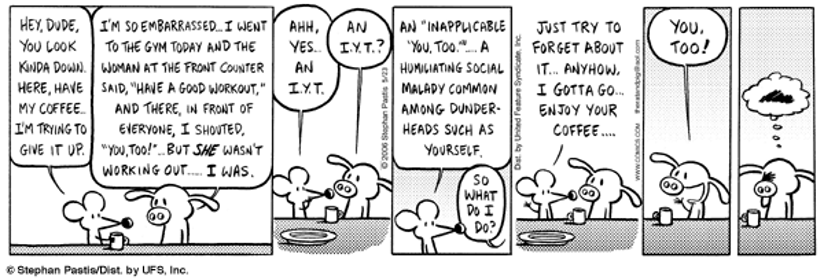
Well, technically there was one more thing, and it gives me a chance to sneak in one of my favorite Pearls Before Swine comics. Hunter also claimed that his bargained-for appeal waiver was unenforceable because the judge, at the very end of the plea hearing, made a verbal miscue. Despite clearly explaining the appeal waiver during the hearing, the judge ended with some clearly inapplicable ‘boilerplate’: “All right. You have the right to appeal. If you wish to appeal, [your trial counsel] will continue to represent you.” Oops!
The Supreme Court correctly held that such a ‘verbal typo,’ if you will, could not have modified the agreement of the parties, especially because that written agreement specified it could only be modified “in writing and signed by all parties.” And here’s that fantastic Pearls strip:
Gorsuch Takes Aim at Coercive Plea Bargaining
Okay, finally, as is too often the case, Justice Gorsuch could not be content letting another Justice speak for the Court. That tendency—in any Justice—is more than a bit annoying. And here in Hunter it was one worse: by inaccurately describing the Court’s miscarriage of Justice rule (making it seem an easier-to-satisfy standard than the Court articulated), Gorsuch forced Kavanaugh to write his own concurrence saying, in essence, ‘Hey, buddy, you don’t speak for us—let’s leave it to the Court’s opinion.’ Quite so.
But Gorsuch’s concurrence, joined by Justices Sotomayor and Jackson, is in dicta much more, as is clear from its opening lines:
“In our times, the jury trial has given way to a conveyor belt of plea bargains. At least some responsibility for that development lies with this Court. When confronted with coercive prosecutorial tactics designed to induce defendants to take plea deals, the Court has often condoned those practices or let them pass in silence.
Today, the Court begins to correct course. It rules that prosecutors may not always leverage their plea-bargaining power to induce a defendant to forgo the right to contest his sentence on appeal. I agree and write separately to outline how we got here and some of the work still ahead.”
The opinion is thus an indictment of our coercive systems of plea bargaining, enabled by our draconian criminal laws—as Gorsuch points out, Hunter statutorily faced up to 300 years in prison without his charge-dismissal plea agreement; he was ultimately sentenced to 51 months. Gorsuch’s arguments echo those typically expressed in our law school classrooms, and time will tell if any of them actually land for the Court.
More particularly, Gorsuch puts forward an interesting claim regarding the constitutional requirement of a knowing plea: how can a defendant knowingly waive rights to an in-any-way-unlawful sentence? Ditto to an impossible-to-predict supervised release condition? In other words, the appeal waiver is part of the plea bargain, and therefore agreement precedes sentencing. As Hunter’s trial judge thus expressed during the plea colloquy, “basically you’re agreeing to whatever sentence I impose.” So long as that sentence follows all substantive and procedural legal requirements, and so long as that sentence is predictable (e.g., number of days in prison), such waiver can indeed be knowing—competent defense counsel can explain what is at stake before waiver occurs. But can one knowingly waive a right to accurate computations? And can one knowingly waive more generally when a judge can impose nearly anything under the sun?—here requiring a defendant to take any and all future-prescribed medications when the defendant allegedly doesn’t drink, doesn’t use drugs, nor “even curse,” and doesn’t “want to have to be forced to medicate”?
Interesting. As always, we’ll have to stay tuned to see whether such argument—and more generally Gorsuch’s concerns regarding plea bargaining that so many of us share—can ‘count to five.’
Coda – Thomas Wants a Source of Law
Actually, one more thing—while it’s easy, in a sense, to dismiss the 1 in an 8-1 Court, Thomas too draws some blood. From where, Thomas wonders, does this “miscarriage of justice” exception derive? Not contract law… and the Court specifies no constitutional provision… so it must be supervisory authority over the lower federal courts… and that seems a poor fit (Thomas himself doubts the power even exists). In Thomas’s own words, “Without any source of law to justify its decision, the Court appears to rest on its policy concern that holding defendants to their waivers sometimes lead to unfair results or make federal courts look bad.” In the wonderful words of The Big Lebowski, ‘you aren’t wrong, Walter Clarence.’ But since we ‘count to five,’ well, so it goes… it’s law now!

Leave a Reply